The best time to cut most garden hedges in the UK is between September and February, outside the main bird nesting season. It isn't illegal to cut a garden hedge from March to August, but it is an offence to intentionally damage or destroy a wild bird's nest while it's in use or being built, so check carefully before you cut and leave any active nest alone. The 1 March to 31 August hedge cutting ban you may have heard about applies to farm hedgerows, not ordinary garden hedges.
When to cut hedges in the UK
For most garden hedges, the main cut is best done between September and February. The RSPB recommends cutting hedges between 1 September and 28 February, because the main nesting season runs from March through the summer, and some birds start early or carry on into September. Read the RSPB's advice.
That doesn't mean a garden hedge can never be touched in summer. Formal hedges like privet, box and laurel grow fast, and the RHS suggests trimming them two or three times during the growing season. Lighter trims in summer are fine, as long as the hedge is checked for active nests first.
For us, late August into September is the sweet spot for most hedges. Most birds have finished nesting by then, growth has slowed so the cut stays neat for longer, and the days are still long enough to get a big hedge done. It still gets a nest check first though.
Best time to cut hedges by type
Different hedges want cutting at different times. This is based on the RHS guide to pruning hedges, with a note from us on each.
| Hedge | RHS suggests | Our tip |
|---|---|---|
| Privet | Two or three times in the growing season | Light trims after a nest check, then a good tidy in late August or September |
| Box | Two or three times in the growing season | Same as privet, little and often keeps it dense |
| Cherry laurel | Twice in the growing season | Big leaves, so a trimmer leaves torn edges that brown off; worth tidying by hand where it shows |
| Leylandii (Leyland cypress) | Two or three times in the growing season | Don't leave it too late in the year, and never cut into the brown wood |
| Beech | Once, in late summer | Late August or early September after a nest check |
| Hornbeam | Once, in mid to late summer | Same as beech |
| Yew | Twice, in summer and autumn | One of the few conifers that will regrow from old wood |
| Hawthorn | Twice, in summer and autumn | A favourite for nesting birds, so check it carefully |
| Holly | Once, in late summer | Wear good gloves |
| Flowering hedges like escallonia and berberis | Straight after flowering | Cut too early and you lose the flowers |
Late summer still overlaps the nesting season, so anything you cut in July or August needs a proper look for nests first. If in doubt, wait until September.
Is it legal to cut hedges in nesting season?
For a garden hedge, yes. There's no law that bans cutting a garden hedge between March and August. What the law protects is the nest. Under section 1 of the Wildlife and Countryside Act 1981, it's an offence to intentionally take, damage or destroy the nest of any wild bird while it's in use or being built, or to take or destroy its eggs. That applies all year round, not just in spring and summer.
So the honest answer is that you can legally cut a garden hedge in nesting season, but if there's an active nest in it, that section has to wait. The RSPB says the same thing: you can legally cut vegetation year round, as long as no active nests are moved or damaged.
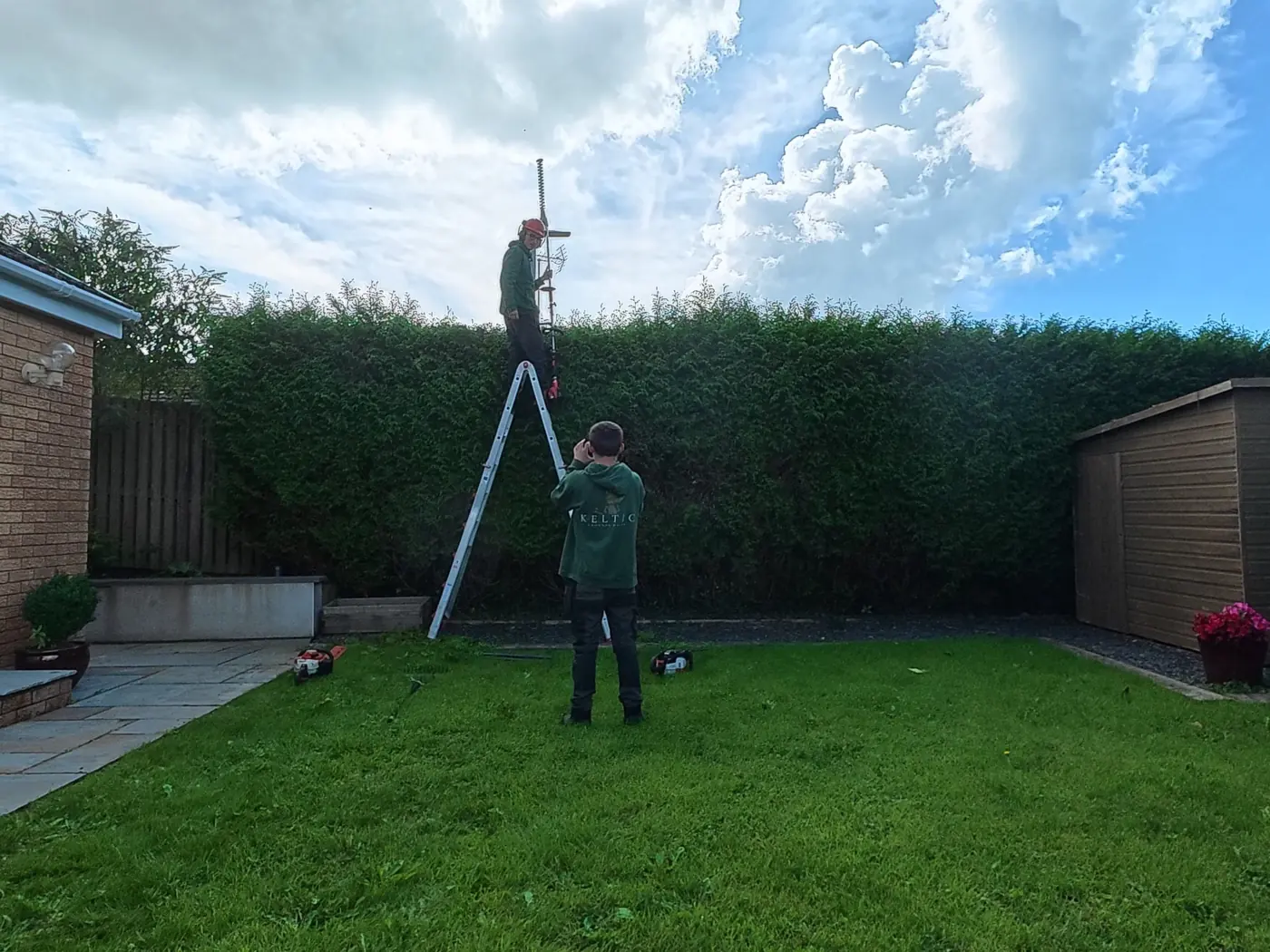
The 1 March to 31 August rule is for farm hedges
You'll often read that hedge cutting is banned from 1 March to 31 August. Those dates are real, but they come from farming rules, not garden rules.
In Wales
Farmers in Wales who claim support payments have to follow the Welsh Government's cross compliance rules. Under the landscape features rule (GAEC 7), hedges and trees on that land must not be cut or trimmed from 1 March to 31 August, with a few exceptions such as road safety, ditch maintenance and hedge laying. The 2026 cross compliance standards keep the same dates. These rules are tied to farm payments, so they don't cover an ordinary garden hedge.
In England
The Management of Hedgerows (England) Regulations 2024 came into force on 23 May 2024. They stop anyone cutting or trimming a hedgerow on or next to agricultural land from 1 March to 31 August. The government guidance says the rules do not apply to the boundaries of a private garden.
If you're in Scotland or Northern Ireland, the wildlife law is worded slightly differently, so check your own local guidance. Wherever you are, the nest protection still applies, garden or farm.
How to check a hedge for nests before cutting
- Watch the hedge for a while before you start, ideally over a few days, for birds flying in and out, especially carrying food or nesting material.
- Listen for chicks calling from inside the hedge.
- Walk the full length and gently part the outside to look in before you start, not as you go.
- Use hand shears near any spot you're unsure about, rather than a powered hedge trimmer.
- Found an active nest? Leave that section, and a good margin around it, until the young have left. Come back to it later.
That's how we work on every hedge between March and August. If birds are nesting, that section waits.
Planning a big hedge reduction
If a hedge needs taking down a lot in height or width, it's easiest to plan it for autumn or winter, when nesting is over and there's no rush. A big reduction in spring or summer means a very careful nest check first, and some sections may have to wait.
Our sixty metre privet hedge is a good example of a big one: twenty foot of privet that had never been cut that low, reduced over a day and a half, £1,220 including three loads of waste.
Don't cut a conifer back to brown
Most conifers, including leylandii, won't regrow from old brown wood. If you cut back past the green growth, you'll be left with a permanent bare patch. Little and often is the only way to keep a conifer hedge at a sensible size. The RHS also says trimming conifer hedges after August can encourage bare patches, so don't leave the last trim too late in the year.
We were asked to tidy up a leylandii hedge that had already been cut back into the brown, thirty metres on two sides. See what happened with that leylandii hedge.
Shape it wider at the bottom
A hedge cut with a slight taper, wider at the base than the top, lets light reach the bottom branches, so it stays thick from the ground up instead of going thin and gappy.
Neighbour's hedge too tall?
Talk to them first. If that fails and it's an evergreen or semi-evergreen hedge over 2 metres that's affecting your home or garden, you can complain to the council under Part 8 of the Anti-social Behaviour Act 2003.
You can cut back overhanging branches to your boundary line, but the cuttings belong to your neighbour and you should offer them back. Talking first saves a lot of grief.
Want this every month? Our seasonal garden tips email tells you what to cut, plant and leave alone each month in Carmarthenshire. Sign up at the bottom of this page.
